A market instrument that mostly says no.
Qovaryx runs on your own machine and reads the market for you. The thing that makes it worth installing is not how often it finds something — it is how much it throws away first.
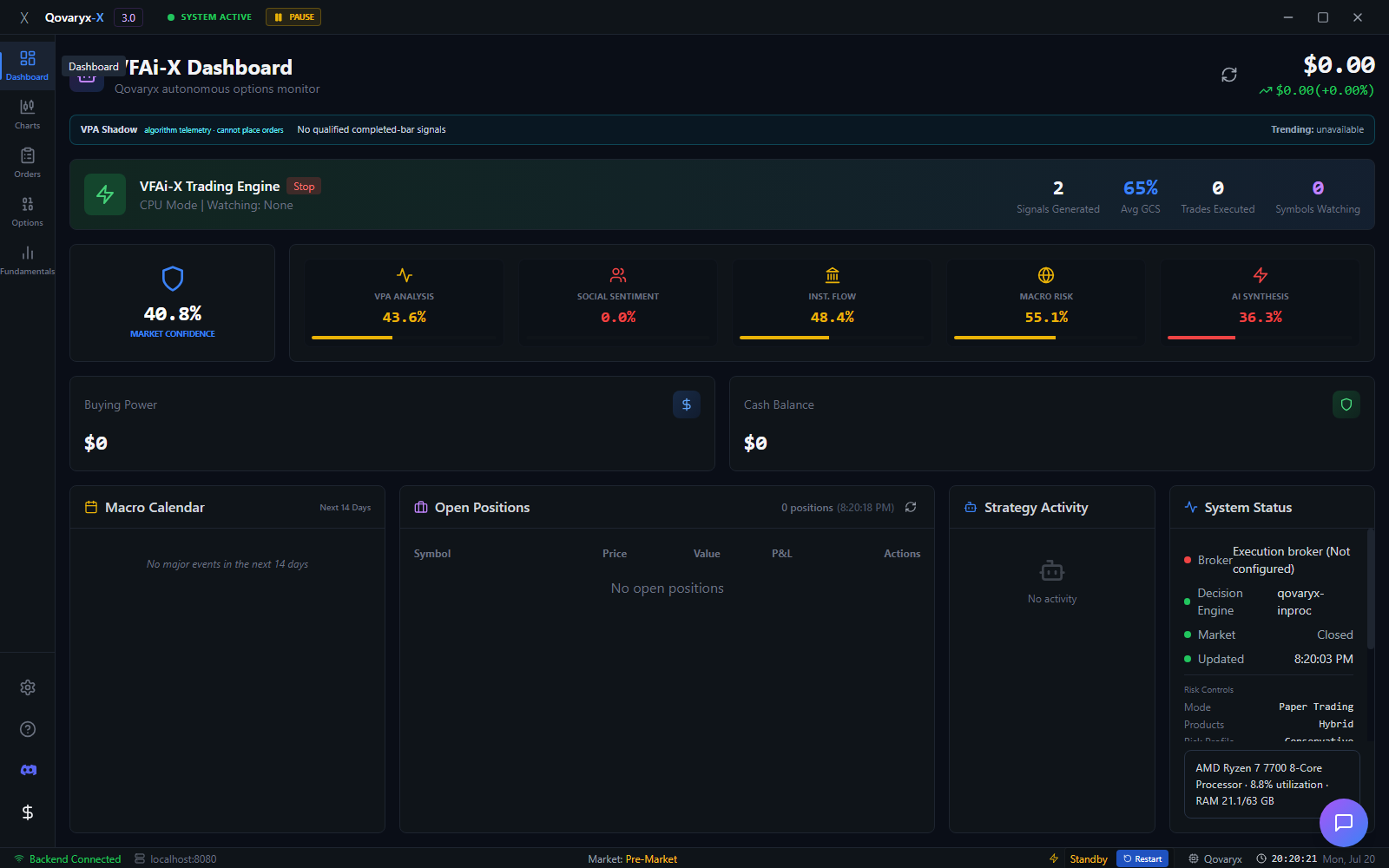
Ch. 01 — The application
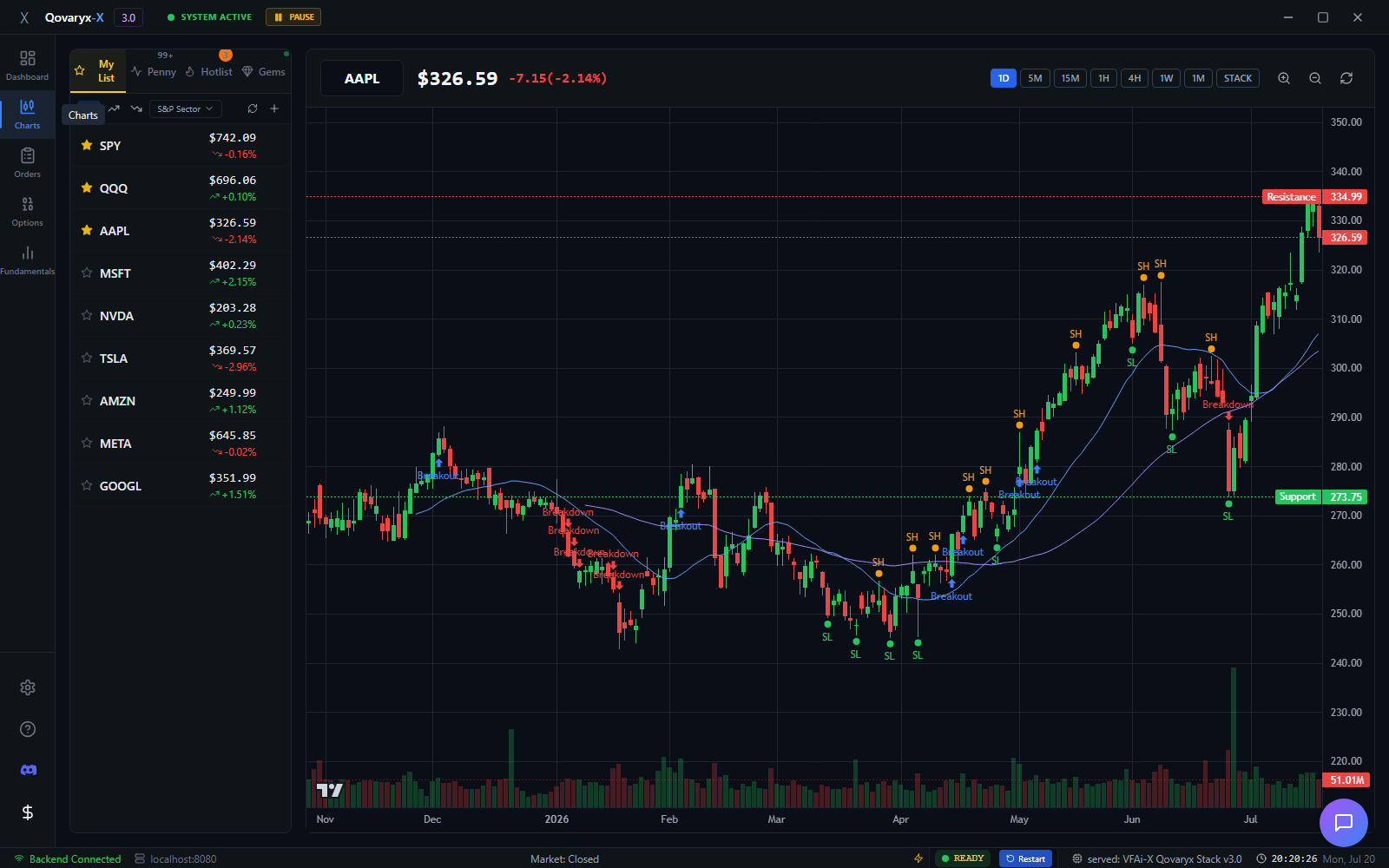
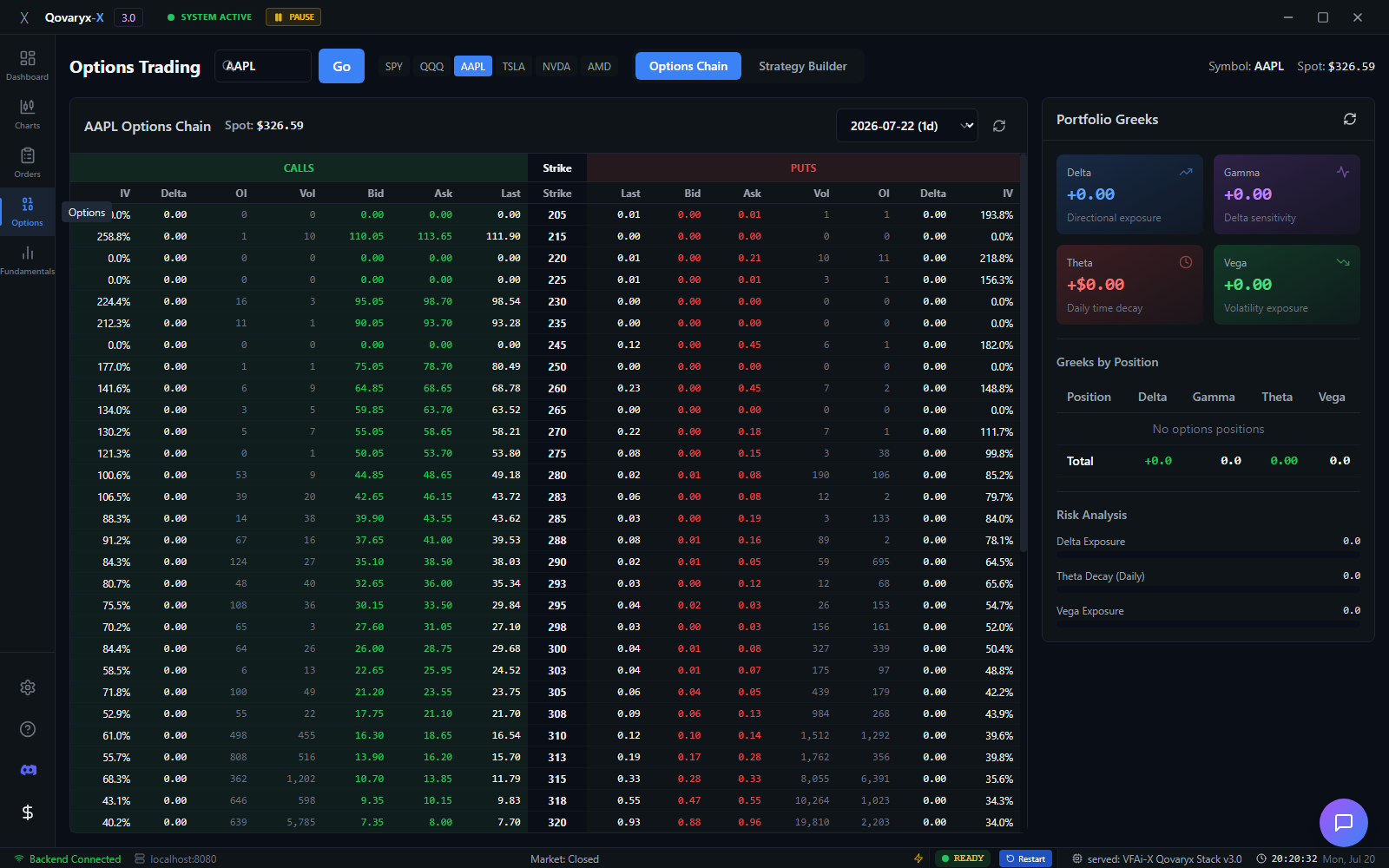
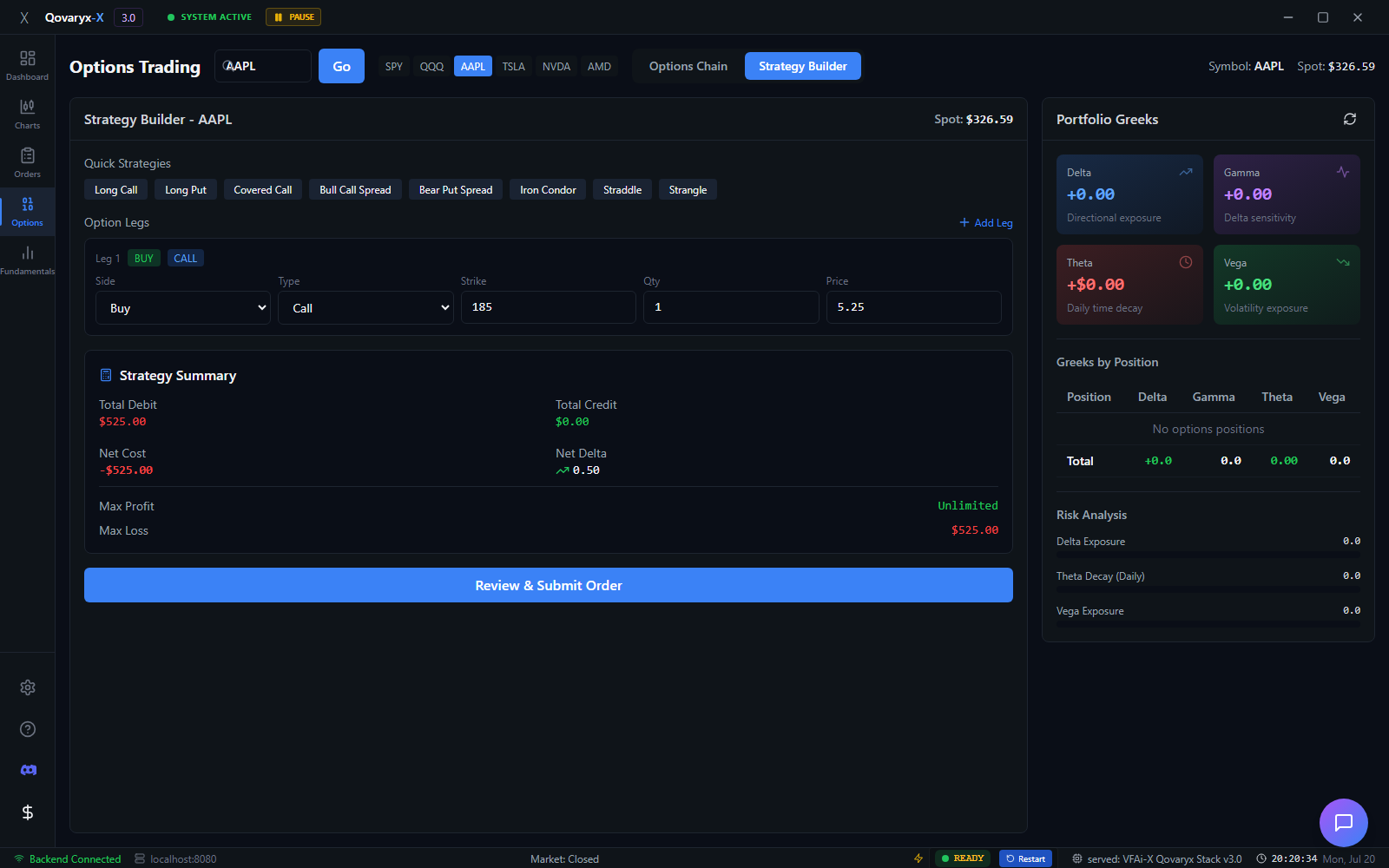
What it looks like on your machine.
Screens from the build currently in evaluation. Everything runs locally — no market data leaves your machine for a cloud model to read.
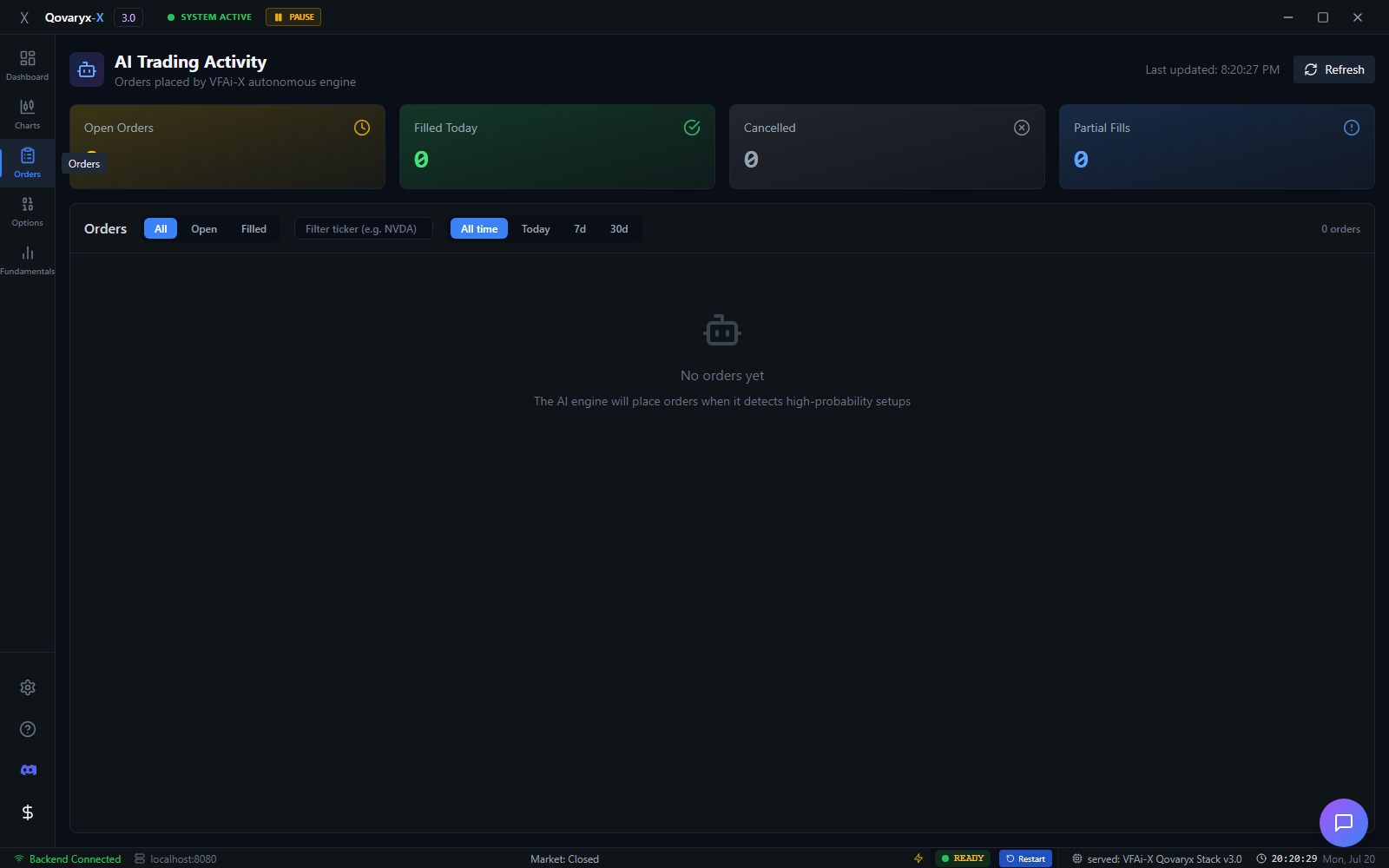
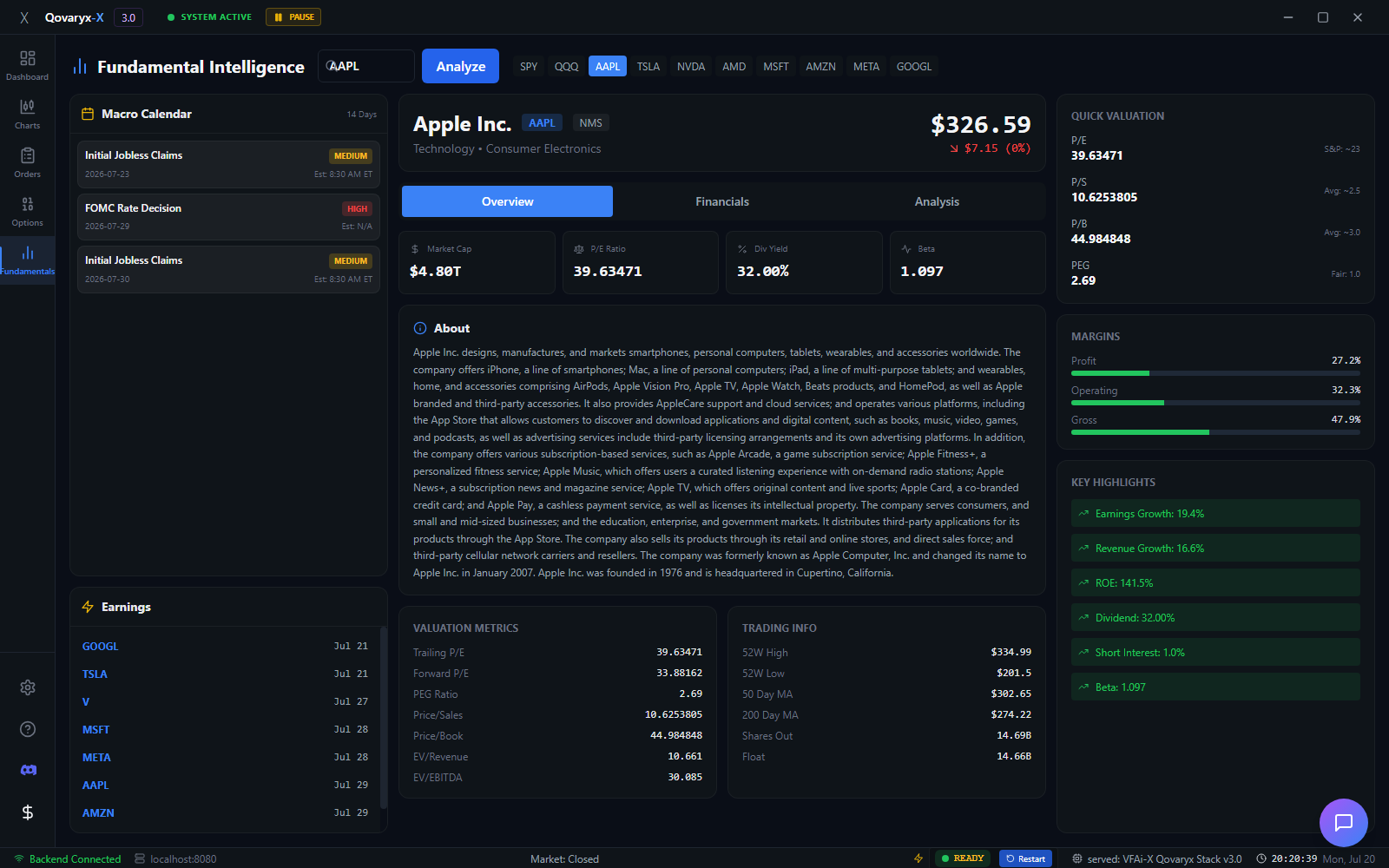
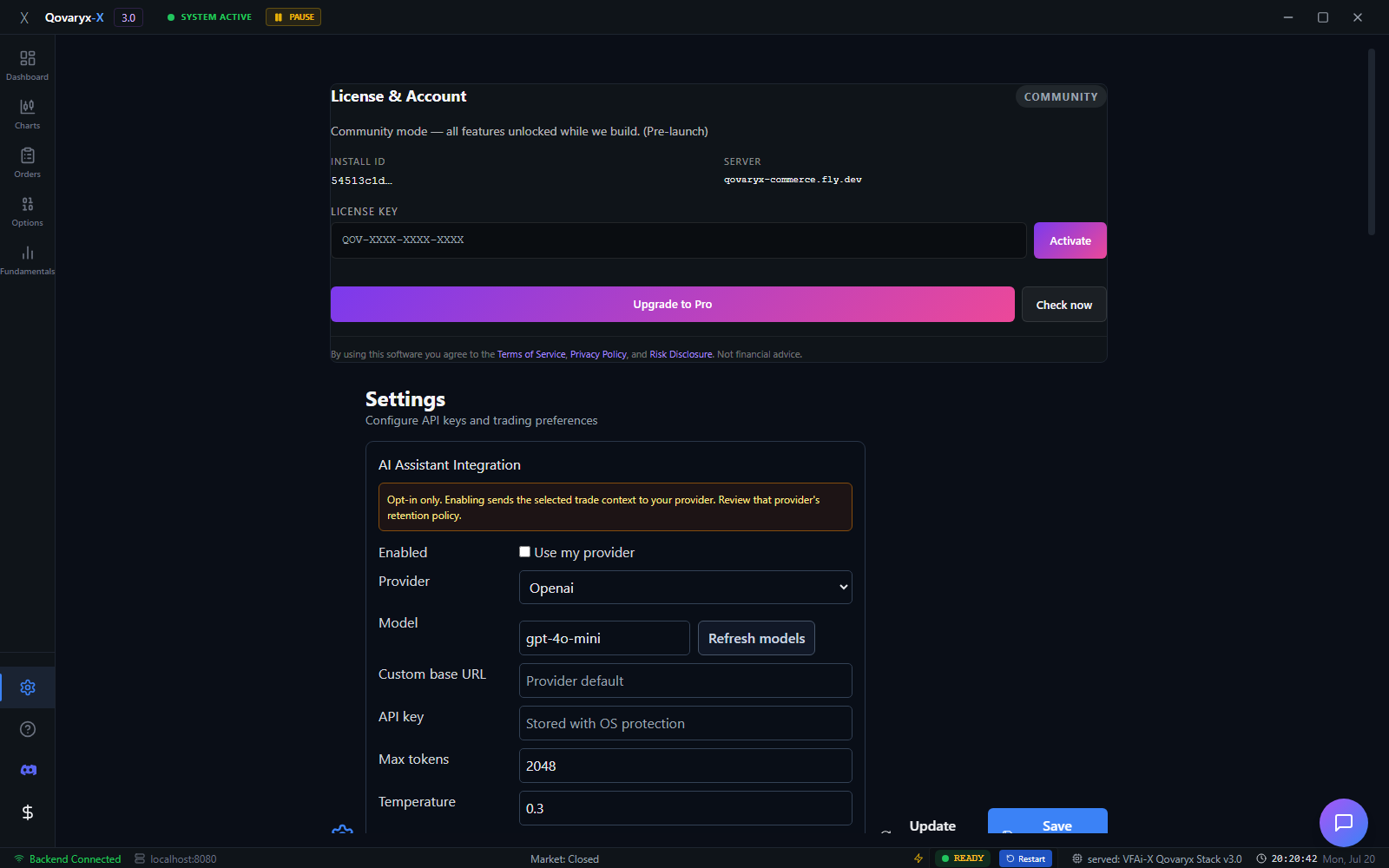
Questions, or want to follow along? The Discord is where release news lands first and where we answer things that are not worth an episode.
Join the DiscordCh. 02 — Method
Built to break its own ideas.
A trading tool is only worth the testing behind it. Four things every candidate signal has to get past before it is allowed anywhere near the product.
Validated on eras it has never seen
Ideas are developed on one span of market history and judged on a completely different one. Anything that only worked by memorising the past fails here, loudly, instead of quietly later.
Near-duplicates are collapsed
Highly-correlated candidates are grouped and reduced to one. Twenty variants of a single idea cannot line up and pretend to be twenty independent confirmations.
Nothing certifies itself
Results are accepted by a deterministic checker that reads the finished state, not by the component that produced them. A stage claiming success proves nothing on its own.
Decades of history, including the bad years
The evaluation runs against the long record — thousands of symbols across tens of thousands of trading days — not a flattering window. The years markets broke are the years that matter.
Ch. 03 — Research log
The reasoning, written down.
This has been running close to continuously for a month — evaluation runs, audits, and the arguments behind each design decision. The write-ups below are the ones we can defend in public. Read them before deciding whether to trust the thing.
Ch. 04 — Build log
We publish the failures too.
A documentary series about running this thing, cut from our own incident records. Not a marketing channel — most episodes are about something going wrong and what the receipts showed afterwards.
New episode every Tuesday, 1:30 PM ET
Our benchmark went up six times. The model got worse. Both true. The reconciliation is the episode.
The drive hit zero and the dashboard stayed green. Every number on it was accurate. Every number was measuring the wrong thing.
We audited our own defect list. Every claim we measured was wrong in some way — wrong file, a module that would not compile, a switch whose fix was the defect.
Ch. 05 — What happens next
No date. A standard instead.
The next build ships when it has been through the evaluation described above, and not before. We would rather be late than ship a trading tool we cannot defend. Join the list and you will hear when it is ready.